Bless you everyone for these comments. I am glad to report that an evening spent curled up with a good book, a few cats, and a descent into watching rubbish tv for the last half hour before bed (which cheered me up no end as I watched Wifeswap and counted my blessings!!!) led to a good night's sleep and I am positively FRISKY today. I think a week's very disturbed sleep pattern led to the black dog day. I don't get them very often, thank heavens, and hugs to those who also have the glums right now. Normal service will now be resumed!
Saturday, 14 February 2009
Update
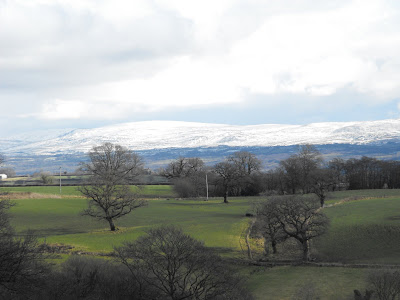
Dartmoor view from near Hound Tor I think. Just to make me even more cheerful, as it's Dartmoor and it's summer . . .

Bless you everyone for these comments. I am glad to report that an evening spent curled up with a good book, a few cats, and a descent into watching rubbish tv for the last half hour before bed (which cheered me up no end as I watched Wifeswap and counted my blessings!!!) led to a good night's sleep and I am positively FRISKY today. I think a week's very disturbed sleep pattern led to the black dog day. I don't get them very often, thank heavens, and hugs to those who also have the glums right now. Normal service will now be resumed!
Friday, 13 February 2009
Normal service will resume later . . .

Sorry, I had been planning to type up a list of what early pioneers to America needed to take to keep them going for One Year, but instead of being upbeat as usual, I am having one of those 'black dog' days where I just feel Very Glum. I am going to sit in a corner with a book until I can shake it off (hopefully a good night's sleep will do it).
Thursday, 12 February 2009
Those Good Old Times (The Countryman again)
One of the delicacies at a commercial travellers' festivity at the King's Arms Hotel, Kendal (Cumbria) on Christmas Eve, 1840, was a pie which 'contained two fat geese, two large turkeys, four fowls, two pheasants, four grouse, two hens, four prize rabbits, three tongues and eight pounds of beefsteak and ham. Its circumference measured seven feet, it was ten inches in depth, and weighed 5 stone 8 pounds.'
In the exercise book of 'Master George Howse' of Over Norton, dated 1818 and written in his schoolmaster's best copperplate, two addition sums involve items of ten marks, and a moidore, which is valued at £1. 7shillings. There are two queries as to the amounts payable by the neighbouring parishes, assessed (for £30. 15shillings 6 pence in one case) in respect of a 'robbery committed on the highway', and a final question is, 'What sum did that gentleman receive in dowry with his wife whose fortune was her wedding suit, her petticoat having two rows of furbelows each furbelow 87 quills and in each quill 21 guineas?' Answers on a postcard please . . .
Below is the first paragraph of a manumission of serfs document on the fly-leaf of an Anglo-Saxon Gospel Book in Bath Abbey: Here is declared on this Christ's book that Leofnoth the son of Aegnelnoth of Korstune (Corston) hath brought him and his offspring from Aelfsig the Abbot and all the brotherhood at Bath for five ora and 12 head of sheep. Witness the port reeve Kuscilla and all the citizens of Bath. May Christ blind him that ever upsets this.
An ora was the eighth of a mark and the mark is said to have equalled 13 shillings and 4 pence. The phrase 'May Christ blind him that ever upsets this' occurs again and, in the Anglo-Saxon, rhymes. The document deals with the freeing by purchase of, in all, five persons and their offspring.
The rule of the Blewbury Friendly Society, dated 1794, include the proviso: 'Every member shall provide himself with a Hat-band and Gloves to attend the funeral of any brother member at his own expence, or forfeit two shillings and sixpence.'
From the 'New Universal Parish Officer' of 1771: 'And whereas women wandering and begging are often delivered of children in parishes to which they do not belong, whereby they become chargeable to the same, it shall be lawful for the churchwardens to detain such woman until they can safely convey her to some justice of the peace who shall examine her and commit her to the house of correction, until the next sessions, who may (if they see convenient) order her to by publickly whipt.' There is a form of warrant to a constable 'to command you to strip from the middle upwards a rogue and vagabond found wandering and begging and to whip him or cause him to be whipt at the common whiippping-post in your said parish.'
A little book found at Bishop's Waltham, a village in Hampshire (not far from where I grew up in Southampton) records a bachelor's purchases from March 1739 to September 1747. Tea cost six shillings a pound, coal about eleven shillings a ton. 'Idle' expenses include:
March 11th, 1741 Lost at Cockfighting and cards .. .. 17 shillings 4 pence
March 15th Lost at cards 2 shillings, spent 6d 2 6
March 18th Lost at cards .. .. .. 18 0
Memo Not to play in a Publick House more.
April 9th Lost at cards .. .. .. 2 3
April 15th Spent (cards) .. .. .. 2 10
May 4th Lost at coits (quoits) .. .. .. 1 4
The diary then jumps to October 1742. Four pounds of beef cost a shilling; a duck ninepence; a chicken tenpence; 'half a hundred oysters' threepence; lobsters ninepence each; asparagus one-and-sixpence a hundred. Then:
Sept. 12th, 1742 Lost at cards 4 shillings at Baynes's.
Promised to pay a gallon of beer when I play again.
Sept. 24th Mind never more to drink or call for half-a-pint at Baynes's.
But alas for human nature: November 29th, 1743: Mind never to play at cards any more at Baynes's nor drenk by half-pints.'
Here is a quotation from the 'Peterborough Advertiser' about the annual meeting of the Court Leet at Godmanchester: You shall swear as Swanherd of this Borough (is the wording of the oath which is administered) you shall if any stray swan come within this Borough be careful to save for the town's use, and if you shall find any swan foul marked or foxed you shall seize them for the town. You shall watch in winter time for them that set lime twigs or lay panters or snares where swans frequent in the high stream or elsewhere, within this Borough, and take them up and show them to Mr Bailiffs that the offenders be punished; and other things belonging to your office you shall do the best of your power. So help you God.'
The Little Old Woman in Clogs
Taken from The Countryman, Winter, 1946.
Beatrix Potter, author of the well-loved Peter Rabbit children's books, was never known by her maiden name in the Lake District, but Mrs Heelis was a name which commanded respect. For nothing but the best in management and stock was tolerated on the fell farms owned by the resolute, strong-willed little woman, who wore clogs and liked old-fashioned ways. She lived in an old oak-beamed, whitewashed cottage, beside the smithy on the west side of Windermere Lake.
(Beatrix potter as a child.)
(Hilltop, Beatrix Potter's home)
Once I went to her to ask if I might lop off the lower branches of a tree where a buzzard had made its nest in a wood on her property near Coniston. 'Yes,' she said, 'you have my permission to try and stop people robbing my buzzard's nest, but the carrior-crows are the worst thieves. last year I saw some crows buffer my poor buzzard off its nest in Troutbeck Park and steal its eggs.' Mrs Heelis strongly believed in the protection of rare birds. She was interested to hear that the peregrines had come back to their eyrie near Coniston, but she had rather mixed feelings about ravens. 'They sometimes kill my newly born lambs, but they are not as bad as those vile carrion-crows.' She told me that one of her earliest girlhood memories of the persecution of rare birds was seeing two hen-harriers on a barn door near Keswick. Harriers are unknown in the Lake District today. 'Last year,', she went on, 'a barn-owl which nested in a barn at the other side of the village lost her mate. The male of a pair which nest in a barn at the back of my cottage mated with the widow as well as with his own wife, but he would not help the widow to feed her young, fetching all his rats and mice to his first wife's brood. The neglected owl could not satisfy the appetites of her young ones by herself, and they all died. I don't know whether the widow has found herself another mate this year, but all the village hopes she will.'
(Garden at her home)
One wet winter's morning Mrs Heelis looked in at the smithy on her way home after visiting a farm. She was clad in an old dress with a sack over her shoulders and was wearing clogs. a tramp who was sheltering there gazed sympathethically at the newcomer, whom he took to be a sister of the road. 'Eh, it's a dirty day for the likes of us to be on the road, missus,' he said. 'If you'd like a cup o' tea and a shilling, just call at the back of the house across the road. The maidservant always gives me something when I calls.'
Mrs Heelis believed in looking into all matters concerning her farms herself, even when well advanced in years. An old Westmorland drainer once told me that she asked him to meet her on one of her farms. They walked up the rough fellside together until they came to a beck, and Jack looked inquiringly at his companion and wondered whether he ought to offer to carry her across. But, as he later told me, 't'owd body slipped off her clogs and paddled through t'beck and niver said owt about it, and it must hev bin gey caald.'
If anyone went against her wishes or annoyed her, she could be severe. A farmer, who lost a horse which had been poisoned through eat yew leaves spreading out of her wood, sent in a claim for its value. It was a justifiable claim, and he received his money, but he also got notice to quit the tenancy of the field where his horse had been grazing. The autocratic little woman had expected the farmer to call and settle the matter in a more neighbourly manner.
Beatrix Potter, author of the well-loved Peter Rabbit children's books, was never known by her maiden name in the Lake District, but Mrs Heelis was a name which commanded respect. For nothing but the best in management and stock was tolerated on the fell farms owned by the resolute, strong-willed little woman, who wore clogs and liked old-fashioned ways. She lived in an old oak-beamed, whitewashed cottage, beside the smithy on the west side of Windermere Lake.
(Beatrix potter as a child.)
(Hilltop, Beatrix Potter's home)Once I went to her to ask if I might lop off the lower branches of a tree where a buzzard had made its nest in a wood on her property near Coniston. 'Yes,' she said, 'you have my permission to try and stop people robbing my buzzard's nest, but the carrior-crows are the worst thieves. last year I saw some crows buffer my poor buzzard off its nest in Troutbeck Park and steal its eggs.' Mrs Heelis strongly believed in the protection of rare birds. She was interested to hear that the peregrines had come back to their eyrie near Coniston, but she had rather mixed feelings about ravens. 'They sometimes kill my newly born lambs, but they are not as bad as those vile carrion-crows.' She told me that one of her earliest girlhood memories of the persecution of rare birds was seeing two hen-harriers on a barn door near Keswick. Harriers are unknown in the Lake District today. 'Last year,', she went on, 'a barn-owl which nested in a barn at the other side of the village lost her mate. The male of a pair which nest in a barn at the back of my cottage mated with the widow as well as with his own wife, but he would not help the widow to feed her young, fetching all his rats and mice to his first wife's brood. The neglected owl could not satisfy the appetites of her young ones by herself, and they all died. I don't know whether the widow has found herself another mate this year, but all the village hopes she will.'
(Garden at her home)One wet winter's morning Mrs Heelis looked in at the smithy on her way home after visiting a farm. She was clad in an old dress with a sack over her shoulders and was wearing clogs. a tramp who was sheltering there gazed sympathethically at the newcomer, whom he took to be a sister of the road. 'Eh, it's a dirty day for the likes of us to be on the road, missus,' he said. 'If you'd like a cup o' tea and a shilling, just call at the back of the house across the road. The maidservant always gives me something when I calls.'
Mrs Heelis believed in looking into all matters concerning her farms herself, even when well advanced in years. An old Westmorland drainer once told me that she asked him to meet her on one of her farms. They walked up the rough fellside together until they came to a beck, and Jack looked inquiringly at his companion and wondered whether he ought to offer to carry her across. But, as he later told me, 't'owd body slipped off her clogs and paddled through t'beck and niver said owt about it, and it must hev bin gey caald.'
If anyone went against her wishes or annoyed her, she could be severe. A farmer, who lost a horse which had been poisoned through eat yew leaves spreading out of her wood, sent in a claim for its value. It was a justifiable claim, and he received his money, but he also got notice to quit the tenancy of the field where his horse had been grazing. The autocratic little woman had expected the farmer to call and settle the matter in a more neighbourly manner.
Tuesday, 10 February 2009
Walking through history
Above and below - the tree-covered valley showed how it must once have looked totally covered in woodland and how it is since clearance and Inclosure. Various bills were passed between 1750 and 1860, although the 1845 Act allowed Inclosure without submitting a request to Parliament.
I managed to get a good walk in today - about an hour and three-quarters, a good half of it steadily uphill too! I was shedding layers till I thought I would end up arrested for indecency! As I walked I thought about how the landscape of this parish and beyond was formed, what it looked like in different ages from the Mesolithic onwards, when it was dense woodland, and the only way of exploring it was along the river valleys, where I don't doubt the earliest population followed the sewin and that king of fish, the sturgeon, the last of which was caught locally in Edwardian times and offered - as it must - first to the King, as it it a Royal fish, but he declined and so it was sold for a shilling a pound on Swansea market. . .
Along the Towy Valley they went, leaving worked flints and stone tools to be found by later generations, clearing woodland and colonizing the land. Spreading out into the river valleys of the Gwili, and Cothi, and Sannan, they formed settlements, building homes for the living and homes for the dead, with Neolithic burial chambers incorporating huge boulders, some of them - near Brechfa - being huge pieces of white quartz. The people of the Bronze Age topped the mynydd land with their burial cairns and tumuli, proclaiming their ownership of the summerlands where people of the valleys brought their livestock to pasture in the passage of transhumance. They built temporary homes, just as their descendants did in the Middle Ages, the Hafods, or summer dwellings.
Hilltops were claimed anew in the Iron Age, when the fires of our local tribes glowed in the blackness of winter nights, claiming grazing land, and ancestral land, and ritual land, just as the Iron Age enclosure beyond our field boundary lay claim to the area on our land where three streams met - a magical place where the Gods dwelt. The sign of three - three Gods, three heads incised in stone, three deaths, a lucky number three . . .
The Romans marched along the valley bottom in their cohorts, from fort to fort with their supply wagons and slaves and amphoras of olive oil and fish paste, their glass and their careless money, their leather sandals hopeless in the mire of the Welsh winter. Small townships grew up at the feet of their forts and became trading posts and market towns like Carmarthen.
Christianity spread like tendrils into the landscape, monastic cells in sheltered hollows where cows now graze, leaving their sainted bones as the focus for a small church. A farm now sprawls where once Egwad dwelled. The old Welsh divisions of Elvet and Cathinog and Hernin still dwell in this landscape. Mynachdy Grange, beside a rushing river, marked the boundary of Talley Abbey's lands, falling into disrepair until it was a stable as many years ago as my walk was in minutes today, its dressed ashlar stone carried to be built into my old farmhouse floor.
A promontary fort for early colonizers became the perfect situation for a motte and bailey when the Normans arrived, but their influence was soon absorbed into the Middle Ages, and local warfare and skirmishes happened elsewhere in and about the parish, focused on the Welsh castles and struggles between the Welsh and the English, and the Welsh against the Welsh . . .
The influential homesteads in the area were rated on their hearths and our house provided High Sheriffs for Carmarthen town, and an Esquire to the Body of Henry VII no less . . . the first Tudor monarch - and on the English throne. Maenors and farmsteads grew up in the landscape, quarried stone to build them from the ground beneath. Talley Abbey grew rich on the fleeces of its vast flocks. The Bardic poet Lewis Glyn Cothi warmed his feet by our hearth and compared genealogies with his host here, when our farmhouse was still a Great Hall and not rebuilt into the hunting lodge (and finally farmhouse) it would become.
Inclosure changed the landscape again, as the common land was fenced off. Labourers on farmsteads were grateful to be granted a small corner of land to build a hovel on - on which their landlord then demanded rent when times were hard for farmers.
The abandoned cottages of last century are now being reinvented as new homes for land-hungry English incomers, and disenchanted Welsh townsfolk. They have a value again. Some are beyond memory and serve merely as a windbreak for a passing tramp, with his billy can and his wood fire, cooking his wet socks on sticks beside the flames. All this I saw today . . .
Monday, 9 February 2009
Titbits from the Countryman (Winter, 1946)
"Our Readers' Motoring Tales"
We were overtaking a car which was going rather slowly. Through its back window we saw what appeared to be a lady wearing a hat with a curious feather. When we caught up we discovered that the passenger was a large white goat, sitting upright beside the driver.
In a narrow Devonshire lane our car overtook some pigs, which we got past with difficulty. A few moments later, round a bend, we met another car going much too fast, and having little time to warn them, shouted simply, "Pigs!" The driver of the other car, much incensed, shouted in reply, "Pigs yourselves!"
Country Proverbs: Better the cold blast of winter than the hot breath of a pursuing elephant. (Chinese) . . . Quite - must remember that one!
An Unusual Cat: He climbs ladders during fruit-picking and pats off the damsons with his paw. He has learnt to walk behind the beehives instead of in front, and he adores honey. He seems to know when it is time for us to stop work, and turns up at the tool-shed when tools are being put away; if any are left out, he waits. One evening he did not come for supper, and we found him sitting by a fork and bucket we had forgotten. He has a keen ear for music and recognizes the 'Skye Boat-Song'. I whistle this, no matter what he is doing, he will come and rub himself against my legs, purring . . .
Tail Corn:
Letter from mother to teacher, "My boy has been way because he had something wrong with his stomach and it came out all over his face."
"Ar, they quiet gals is always the worst. Give me a gal as laughs and jokes. As my pore mother used to say, "It's the quiet sow that sups the most wash."
"Is it true, mummy, that when we are born we are made of dust, and when we die we go to dust?" "Yes dear." "Well, there's somebody either coming or going under the spare room bed . . ."
"And I want old Mrs G to lay me out," said the old coachman as he lay dying. "I won't have any young woman of the village messing about wi' me."
And lastly, JINGLING JOHNNY:
A little wizened fellow who took with him his smile and his band, from which he got his name - his main instrument was a melodeon - he wore over his shoulders a harness, on the front of which was a kind of pan-pipes, which he could play by a skilful movement of his head. At his back was a small drum, with a levered drumstick. A piece of rope from the drumstick to his left foot enabled him to beat time by tapping his foot. On his left side a cymbal was strapped, another being attaached to his left elbow. While playing the melodeon he could, by moving his elbow, clsh the symbals. Then there were his jingles. Tied to his legs he had strips of cloth on which were stitched rows of little bells. There were bells on his cap too, so that with every movement he made, he jingled. Johnny entertained villagers, appeared at garden fetes, cricket matches and flower shows, and was as much a part of the fairs as the roundabouts. He showed up, as he said, "With the butterflies."
The Countryman extracts - Part 1, Walks and Talks with Thomas Hardy
This (shortened) article was written by Sir Newman Flower (never heard of him!) who apparently was chairman of Cassell's and born in Dorset. he wrote books on Handel, Schubert and Sir Arthur Sullivan and also edited the Journals of Arnold Bennett).

Through the long years of friendship with Thomas Hardy I had many opportunities of talking with him during our rambles near his home at Max Gate, Dorchester, and further afield. As we walked, he would talk continuously in that quiet, gentle voice of his that never raised its pitch. He broke off now and then to observe a field in vivid colour, or the glory on an autum wood, or would halt suddenly and stare, too enraptured by the beauty of the scene to comment. Once we were leaning over a stile looking down on Yellowham Wood, outside Dorchester, which figures in 'Far from the Madding Crowd' and other novels. The bluebell carpet was lovely to heold, as it is every spring in Yellowham Wood. "Have you ever heard of a world artist who could do that?" he asked.
On another occasion we were walking near the little village of Bockhampton, a couple of miles from Dorchester, where he hd been born in that lovely thatched cottage which is now monument to his memory. The country about it was riotous with wild flowers. In the little cottage garden I used to have a cup of tea with his old mother, who wore a sunbonnet, and, as T.H. said, was like Whistler's portrait of his mother. He told me as we walked, "I used to wonder, when I was a boy walking up this road, what sort of a world I ws going into. The thoughts of a boy are pieces of life: it is life that fashions them as the sun shapes the odd things that grow in our gardens. There are a lot of things I thought and queried in those days which I could not explain even now, although more than seventy years have passed over me."
(Linked from Whistler's Mother page . . . http://www.mr-whistlers-art.info/art/paintings/portraits/mother.shtml )
In the Who's Who 1918, Hardy annotated himself thus: 'against bird-catching, performing animals, careless butchering, and the chaining of dogs.' He loathed these things. All clruelty; hurt him. He told me once that he regarded the Spanish bull-fight as the work of maniacs gone more mad. 'Animals, birds, insects are here as part of the pageant of our lives', he added. 'Exactly what part some are intended to play we do not know. But in the case of beaten, over-driven horses - only fools forget that it is a crime.'
. . . He had lived long enough to remember the days when the Dorset labourer got 12 shillings a week, and brought up a family on it. Yes, and if he caught a rabbit he was thrown out of his cottage, rain-driven, unholy place that it ws. hardy told me he had seen some foul things of this kidn done in Dorset in his youth. But what had impressed him more than anything was his father's description of a scene which he witnessed when four men were hanged for being present
with others who had set fire to a hay rick. One of them was a half-starved boy of eighteen, and they had to put weights on his feet to break his neck. Hardy thought this was the most horrifying thing in human tragedy he had heard of . . .
. . . And he loved picnics. Whenever I was in Dorset, and that waas often, I used to ring him up and get him out on a picnic. How well I remember the last one! I went to Max Gate with a good luncheon basket, and collected him and Florence hardy. My wife and son sat with her at the back, and T.H. was beside me at the wheel. 'Now T.H.," I said, 'where do you want to go?' He thought for a while. Then he said he would like to go to High Stoy, that hill in west Dorset made famous in 'The Woodlanders'. While I was driving down one of the country lanes, T.H. said, 'Go slow here. I want you to notice this woman coming towards us.' When she had passed he said, 'That might have been Tess. That is just how I imagined her to be.'
On the way home, as we drew near Cerne Abbas, he asked me to stop the car. 'See that farm over there, and that big field?' he said. 'Kipling came down to stay with me a short time ago, and wanted to go over the scenes in my novels. So I brought him round here. When we were crossing that big field there on foot, a savage sow came for us. We made a dash for the hedge, and were scrambling through it when the farmer came out and shouted, 'Let 'un be! Let 'un be! 'E won't 'urt 'ee. if 'ee don't rumple 'un." ' said hardy, 'We weren't waiting to 'rumple 'un' and he added, 'Kipling and I tore our suits to pieces getting through that hedge'. I suppose that ws the only time in his life that anything in nature ever frightened Thomas Hardy . . .
I think this article brings the true character of Thomas Hardy to life in the way that the biographies I have of him seem to have missed.
Through the long years of friendship with Thomas Hardy I had many opportunities of talking with him during our rambles near his home at Max Gate, Dorchester, and further afield. As we walked, he would talk continuously in that quiet, gentle voice of his that never raised its pitch. He broke off now and then to observe a field in vivid colour, or the glory on an autum wood, or would halt suddenly and stare, too enraptured by the beauty of the scene to comment. Once we were leaning over a stile looking down on Yellowham Wood, outside Dorchester, which figures in 'Far from the Madding Crowd' and other novels. The bluebell carpet was lovely to heold, as it is every spring in Yellowham Wood. "Have you ever heard of a world artist who could do that?" he asked.
On another occasion we were walking near the little village of Bockhampton, a couple of miles from Dorchester, where he hd been born in that lovely thatched cottage which is now monument to his memory. The country about it was riotous with wild flowers. In the little cottage garden I used to have a cup of tea with his old mother, who wore a sunbonnet, and, as T.H. said, was like Whistler's portrait of his mother. He told me as we walked, "I used to wonder, when I was a boy walking up this road, what sort of a world I ws going into. The thoughts of a boy are pieces of life: it is life that fashions them as the sun shapes the odd things that grow in our gardens. There are a lot of things I thought and queried in those days which I could not explain even now, although more than seventy years have passed over me."
(Linked from Whistler's Mother page . . . http://www.mr-whistlers-art.info/art/paintings/portraits/mother.shtml )In the Who's Who 1918, Hardy annotated himself thus: 'against bird-catching, performing animals, careless butchering, and the chaining of dogs.' He loathed these things. All clruelty; hurt him. He told me once that he regarded the Spanish bull-fight as the work of maniacs gone more mad. 'Animals, birds, insects are here as part of the pageant of our lives', he added. 'Exactly what part some are intended to play we do not know. But in the case of beaten, over-driven horses - only fools forget that it is a crime.'
. . . He had lived long enough to remember the days when the Dorset labourer got 12 shillings a week, and brought up a family on it. Yes, and if he caught a rabbit he was thrown out of his cottage, rain-driven, unholy place that it ws. hardy told me he had seen some foul things of this kidn done in Dorset in his youth. But what had impressed him more than anything was his father's description of a scene which he witnessed when four men were hanged for being present
with others who had set fire to a hay rick. One of them was a half-starved boy of eighteen, and they had to put weights on his feet to break his neck. Hardy thought this was the most horrifying thing in human tragedy he had heard of . . .
. . . And he loved picnics. Whenever I was in Dorset, and that waas often, I used to ring him up and get him out on a picnic. How well I remember the last one! I went to Max Gate with a good luncheon basket, and collected him and Florence hardy. My wife and son sat with her at the back, and T.H. was beside me at the wheel. 'Now T.H.," I said, 'where do you want to go?' He thought for a while. Then he said he would like to go to High Stoy, that hill in west Dorset made famous in 'The Woodlanders'. While I was driving down one of the country lanes, T.H. said, 'Go slow here. I want you to notice this woman coming towards us.' When she had passed he said, 'That might have been Tess. That is just how I imagined her to be.'
On the way home, as we drew near Cerne Abbas, he asked me to stop the car. 'See that farm over there, and that big field?' he said. 'Kipling came down to stay with me a short time ago, and wanted to go over the scenes in my novels. So I brought him round here. When we were crossing that big field there on foot, a savage sow came for us. We made a dash for the hedge, and were scrambling through it when the farmer came out and shouted, 'Let 'un be! Let 'un be! 'E won't 'urt 'ee. if 'ee don't rumple 'un." ' said hardy, 'We weren't waiting to 'rumple 'un' and he added, 'Kipling and I tore our suits to pieces getting through that hedge'. I suppose that ws the only time in his life that anything in nature ever frightened Thomas Hardy . . .
I think this article brings the true character of Thomas Hardy to life in the way that the biographies I have of him seem to have missed.
Subscribe to:
Posts (Atom)

